Working with refugees since 1984

About The Border Consortium (TBC)

TBC envisions a peaceful Burma/Myanmar where there is full respect for human rights, diversity is embraced, and communities can prosper.

Who We Are

Founded in 1984, the Border Consortium (TBC) is unique among humanitarian organisations in Southeast Asia. We are the only International Non-Government Organisation specifically established to assist in managing the refugee influx from Myanmar and to provide emergency support to displaced communities along the Thai Myanmar border.
TBC is based in Bangkok and operates under United Kingdom charitable governance standards. Our Board and senior leadership team represent a mix of local and international expertise. This structure ensures accountability to consortium members, donors, and the communities it serves, while enabling it to draw on both regional knowledge and international networks.

Over the years the organisation has changed and evolved. Today the consortium’s members consist of nine international non-governmental organisations (INGOs) from ten countries. They are:

Act for Peace, The National Council for Churches (NCCA), Australia
Christian Aid, UK and Ireland , Church World Service, USA
DanChurchAid, Denmark
Diakonia, Sweden
ICCO Cooperation, The Netherlands
Inter Pares, Canada
International Rescue Committee, USA
Norwegian Church Aid, Norway

TBC’s head office is in Bangkok, Thailand. The organisation has field offices in Mae Hong Son, Mae Sot, and Kanchanaburi towns in Thailand.

TBC Board

TBC board members meet at least twice annually in person at an Extraordinary General Meeting (EGM) and at the Annual General Meeting (AGM). At least another two meetings are conducted over the Internet each year. Board members are elected for a two-year term at the AGM. The board has a minimum of five members and a maximum of eight. The board must consist of at least four member-agency representatives. Up to four external candidates can be elected.

TBC currently has a staff of 56 people The total staff gender ratio is almost exactly 50:50. The majority of staff are local employees. Staff backgrounds reflect in many ways the populations with whom TBC works, with many our employees having full or part Karen/Kayin, Karenni/Kayah, Burman, Shan, Thai, and other backgrounds.

Donors

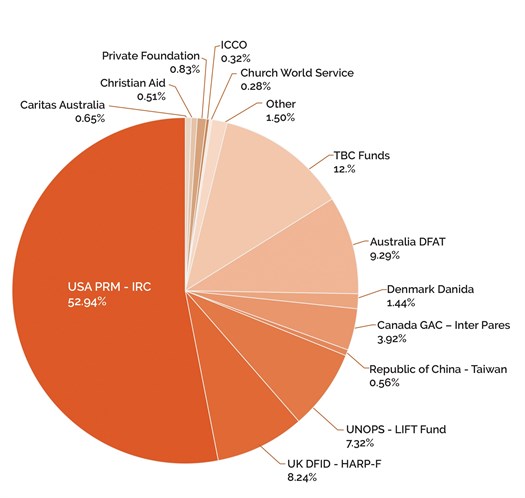
Approximately 95 percent of its funding came from government donors such as US, UK & Australia. Although most of TBC’s funds are now institutional, it still continues to receive funds from individuals, private foundations and organisations and churches. These contributions are particularly encouraging and uplifting for our staff and members. To make a donation, please visit the Donation page.

TBC would like to sincerely thank its donors and members for their generous contributions and support.

Our Vision

People displaced from Southeastern Myanmar, refugees in Thailand, and the communities where they live are rebuilding their lives – free to move safely, work, study, and plan their futures with dignity.

TBC’s Vision articulates a clear direction for its work, grounded in principles of protection, dignity, and self-reliance. It reflects TBC’s long-term commitment to supporting displaced communities from Southeastern Myanmar, refugees in Thailand, and the communities where they reside, as they work to rebuild their lives and plan their futures. 

This Vision serves as the cornerstone of TBC’s Strategic Plan, providing a strategic foundation for decision-making, ensuring that priorities align with the aspirations of the people served and the partners TBC works alongside. It is a statement of intent and accountability, reflecting both the challenges faced by these communities and the opportunities for transformation. Through collaboration with local communities, governments, and regional partners, TBC is committed to advancing a future of safety, resilience, and dignity for all.

Our Values

  • Refugee and Displaced Person Centred: We place the needs, perspectives, and aspirations of displaced people and host communities at the centre of all decisions, programs, and partnerships, ensuring our work is responsive, inclusive, and empowering.
  • Integrity and Ethics: We uphold the highest standards of honesty, fairness, and transparency in all our actions, ensuring trust and accountability with the communities and partners we serve.
  • Respect and Empathy: We treat every individual with dignity, seeking to understand their experiences and needs, and responding with compassion and care.
  • Collaboration and Teamwork: We believe in the power of partnerships and collective effort, working across teams, organisations, and communities to achieve shared goals.
  • Inclusion and Diversity: We value diverse perspectives and experiences, actively promoting equality and creating spaces where everyone is represented and empowered.
  • Commitment and Work Ethic: We demonstrate dedication, professionalism, and resilience in delivering meaningful and sustainable outcomes for displaced communities.
Our values form the foundation of TBC’s identity, shaping the way the organisation works with communities, partners, and each other. Central to TBC’s work is a strong commitment to being refugee and displaced community centred, ensuring that those served are at the heart of every decision and initiative. By prioritising their voices and experiences, TBC facilitates programs and partnerships that are not only responsive but also empowering. Our values of integrity, respect, collaboration, inclusion, and commitment build on this foundation, fostering dignity, fairness, and trust throughout operations.

Strategic Direction 1: Humanitarian and Emergency Response

Communities affected by conflict and displacement can access timely life- saving food, shelter, and protection, with no one left behind. 

TBC’s humanitarian response prioritises timely, life-saving assistance for communities affected by conflict and displacement in Southeast Myanmar and Thailand. This includes essential support such as food, cooking fuel, shelter, essential non-food items, and protection tailored to the emergency dynamics, with a clear focus on local leadership and refugee-led delivery systems. Humanitarian action is grounded in TBC’s trusted networks of refugee committees, ethnic leadership, and local civil society, ensuring that interventions are culturally relevant, community-driven, and accountable. Refugees and displaced persons are not only recipients of emergency humanitarian assistance but are empowered as leaders, decision-makers, and first responders. TBC acts as a facilitator, providing technical support, funding, and advocacy to ensure communities have the resources, skills, and authority to respond effectively. This approach strengthens resilience and reinforces community trust while ensuring assistance is tailored to local realities.

Strategic Direction 2: Local Integration, Resilience, and Recovery

Displaced people and host communities can rebuild their lives with safety, dignity, and equal opportunity.

Displaced people, refugees, and host communities in Southeast Myanmar and Thailand can strengthen their ability to cope, adapt, and rebuild their lives. Women, people with disabilities, and minorities are supported to claim their rights, reduce exposure to harm, and pursue safe and fair opportunities for work, health, and education. TBC enables communities to take steps towards durable solutions and advocates with others to address the protection gaps where legal frameworks are absent.

Strategic Direction 3: Strengthen Local Leadership and Governance

Communities lead their own decisions, resources, and services in inclusive and accountable ways.

Communities affected by displacement and conflict in Southeast Myanmar and Thailand can take the lead in making decisions, managing resources, and organising local services. Women, people with disabilities, and minorities are supported to have an equal voice in leadership and governance. TBC plays a facilitative role, enabling and connecting communities with partners, so that local leadership is inclusive, accountable, and sustainable.

Strategic Direction 4: Maintain TBC Organisational Capacity and Flexibility

TBC stays strong, adaptable, and ready to support communities through changing times.

TBC remains a trusted and effective partner by keeping the right people, systems, and resources in place to support communities in Southeast Myanmar and Thailand. TBC’s role as facilitator, enabler, connector, and advocate adapts to match the changing operating environment. This flexibility allows TBC to expand or reduce engagement as resources and needs shift, while maintaining a strong
commitment to inclusion and localisation.

Establishing the Camps, Establishing the Consortium

The year 1984 is the starting point for the establishment of what was supposed to be temporary refugee camps in Thailand for ethnic Karen fleeing offensives by Burmese troops. It wasn’t the first time that people fled over the Moei River that separates the two neighbouring countries to seek temporary sanctuary in Thailand. In fact, for several years, refugees would cross the border near Mae Sariang during the annual dry season offensive by the Burmese army around the Karen National Union headquarters near Manerplaw. Local Thai-Karen communities and missionary groups would provide temporary relief in this remote part of Thailand and the situation received little public attention. When the rains came, those who fled would return home to plough and plant their crops.
But 1984 changed all that.

The military offensive in 1984 on the trading posts of the KNU along the Moei River opposite Tak province was more widespread, intense and sustained, and subsequently, the 9,000 Karen who fled was too much for local communities in Thailand to deal with. It was at this point that the Thai government, through the Ministry of Interior, requested voluntary agencies to provide emergency assistance. These voluntary agencies had been working in Thailand for several years already, dealing with the Indochinese refugees through the umbrella of the Committee for the Coordination of Services to Displaced Persons in Thailand (CCSDPT).
The seven agencies who decided to provide support to the Karen refugees pooled their financial resources and established a joint programme. Together, these agencies formed the Consortium of Christian Agencies (CCA), the original name of what is now The Border Consortium.
At the beginning, TBC’s work was rather more simple than it is today. Principally, the consortium funded the provision of emergency relief in the form of rice, fishpaste, salt and chilli which was supplied to the Karen Refugee Committee (KRC). The KRC in turn would distribute the food and relief supplies to the refugees.

From the outset, TBC found the KRC to be highly organised, establishing the camps themselves. All camp activities such as cultural and educational needs were sustained by the refugees themselves. Furthermore, TBC did not provide all the refugees essential food needs, as a level of self-sufficiency existed, particularly in the early years.
Other essential relief items such as blankets, mosquito nets and cooking utensils were also provided. There were initially seven camps along the River Moei, with refugees building their homes out of bamboo and dried leaves foraged in the nearby forest. This ‘temporary’ situation remained, and over the years, as more sustained military offensives continued, more refugees started arriving.

1988

Events in 1988 in central Burma brought the world’s attention to the democracy struggle. Spurred on by economic mismanagement and violent suppression of student demonstrations, a national uprising comprising of all sectors of society manifest in mass street demonstrations, a general strike, and calls for democracy. A violent crackdown, with thousands of protestors gunned down in the streets bloodily ensured that the overthrow of military rule was not going to happen. Students fled to the border areas, and ethnic Karen, Mon, and Karenni communities provided support to them. Some students made their way over the border to the camps, while some formed an armed group with support from the KNU. The students brought new cooperation and relations between ethnic groups and the ethnic Burman and also international attention to the Burmese situation.

The Burma military meanwhile, staged a coup in September 1988, replacing the previous military-led government – the Burma Socialist Programme Party – with a new ruling clique, the State Law and Order Restoration Council (SLORC). A subsequent national election was held in 1990 and despite SLROC intimidation of democratic forces, including the imprisonment of emergent democracy leader, Daw Aung San Suu Kyi and previous Prime Minister, U Nu, the military lost heavily. Their party won ust ten seats while Daw Aung San Suu Kyi’s National League for Democracy (NLD) party won an overwhelming majority, 80% of the seats. Unwilling to accept defeat, SLORC reneged on its promise to respect the outcome of the election, arrested at least 100 elected representatives, declared the necessity of drafting a new constitution before a transfer of power, and in 1992 established the National Convention for this purpose. This set the country into stasis politically for much of the next twenty years. General Than Shwe became the junta head in 1992, and SLORC changed its name in 1997 to the State Peace and Development Council. Daw Aung San Suu Kyi, Nobel Peace Prize Winner in 1991, remained under house arrest for much of this time, and the military’s political position appeared set. This moment of hope in 1988 then, not just for the democracy protesters in Rangoon but also for ethnic nationalities such as the Karen and the Mon, was extinguished, and military rule was consolidated over the next few years via persecution of democracy actors, military offensives against ethnic groups, and the closing of meaningful space for political reform.

Fall of Manerplaw: More offensives, more refugees

Beginning in 1995, however, a major development regarding armed conflict had huge, permanent impacts on displacement and refugee communities. A section of rank-and-file soldiers from the KNU, unhappy at perceived Christian dominance of KNU leadership, broke away to form the Democratic Karen Buddhist Army (DKBA). A SLORC offensive against KNU’s headquarters at Manerplaw, aided by this DKBA splinter group who knew the territory well, resulted in the KNU’s loss of this politically and symbolically important place in early 1995. It was important not just for the KNU as its show-piece headquarters, but for the various pro-democracy forces and other organisations also based there. After the fall, SLORC forces continued their military operations north and south of Manerplaw, taking control of territory on the Moei and Salween Rivers. This led to a wave of refugees seeking safety over the border in Thailand, and TBC reported its biggest population increase in a six month period – up to 91,000 from 77,000.

The 1995 offensive against Manerplaw was a huge military victory for the SLORC, after which they controlled the border area from Mae Sot up to Mae Sariang. They did not stop there though, and 1995 started a period of the fall of what was then a ‘bufferzone’ on the border. A short-lived ceasefire in 1995 with the Karenni National Progressive Party broke down and a new offensive, including the use of airstrikes, was enough for SLORC to effectively take control of the Karenni border by April 1996. More offensives against the KNU in the years following the fall of Manerplaw, as well as the surrender of Khun Sa in Shan State meant that by 1997, the ethnic ‘bufferzone’ along the border with Thailand has fallen and the SLORC/SPDC controlled most of this area.

Camp Consolidation

One of the most important implications of this emergency situation was the beginning of a plan by the Thai government to consolidate the various smaller camps into a few larger camps, the reasoning being that larger camps are easier to defend given the real threat of attack from over the border. While this was an understandable response, there was concern that this would replace the village-style settlements that promoted self- sufficiency among the refugee populations since the beginning of the camps in 1984. Larger, more ‘town-style’ camps would impact the relief programme, making the refugees more aid-dependent. TBC managed to negotiate a compromise whereby camp consolidation would happen, but this wouldn’t be to the extent originally mooted. However attacks on the refugee camps continued until 1998 as DKBA troops would enter camps, murdering and robbing refugees and threatening them with more violence. In the first six months of 1996 alone, the Thai army reported 44 DKBA incursions, resulting in 14 deaths. In 1997, with another huge increase in refugees, bringing the population in the camps up to 116,000 due to a renewed offensive by SLORC, the DKBA attacked three refugee camps, destroying Wangka and Don Pa Kiang camps before being repelled from Mae La camp. This left 7,000 refugees homeless and catalysed a more security-focussed strategy towards refugee camps from Thai authorities. Subsequently, the fencing in of the camps, stricter controls of movement in and out and more stringent restrictions on what activities were permitted in camps were enacted by Thai security forces.

The camp consolidation process, which was catalysed by these attack starting in 1995, continued apace, with seven camps closed in the first 6 months of 1998. Sometimes these camp consolidations were undertaken haphazardly without proper planning and sometimes with force. By 1998, the NGOs that were part of TBC were able to negotiate the details with local authorities, organising transportation with the Thai army for 9,000 refugees, and purchasing construction materials for housing and public buildings at the new sites for a total of 15,000 refugees. By the end of 1998, TBC was providing assistance in 17 locations, four of which were across the border, compared with 30 at the beginning of 1995. The consolidations were not 100% welcomed, and a protest against being moved from Mae Ye Hta Camp to the new Mae Ra Ma Luang Camp occurred in February 1998, with camp residents refusing to move due to security concerns at the new camp. Restraint, patience, and negotiation between the refugee leaders, the Refugee Committee, the Thai army and other Thai authorities, however, meant that the situation was resolved peacefully.

The new security-based restrictions, including not permitting refugees to go outside to find work, forage, or cut down bamboo or wood resulted in TBC having to provide all of the building materials for some camps, extend the distribution of yellow beans and soya bean oil as food supplements in order to maintain basic nutritional needs, and supply sawdust logs for cooking fuel in many places. This meant that the refugees became more aid dependent. Apart from this growing aid dependency, the more stringent camp conditions reduced quality of life for refugees, deterred potential newcomers, and resulted in some leaving to try their luck as part of the huge migrant workforce that lives in Thailand, many of whom are undocumented and share similar experiences in their homeland and characteristics of those refugees living in the camps.

TBC also supported other displacement sites over the border, primarily through food such as rice, including Karen camps along the Moei River, and to around 6,000 displaced persons in IDP sites in Shan State. Working with the Shan Refugee Committee, additional support has also been provided to a displacement site in Wang Hieng Province, northern Thailand, which has been home to several hundred refugees, although they are not recognised as such by the Thai government.

Internal Displacement and Relocations

As SLORC (later SPDC) forces gained territorial control of southeastern Burma, the causes of displacement began to evolve. While direct armed conflict continued to displace villagers, with SLORC troops establishing a permanent presence in many areas of the southeast, human rights violations related to forced labour, forced relocations, extortion, the torching of villages, destruction of food stores and crops, theft of livestock and property, extra- judicial killings, and rape, were all every day occurrences affecting hundreds of thousands of people. The forced relocations of whole villages to areas more directly under military control which began in 1996 created massive upheaval and was one of the main contributing factors to a sharp increase in internal displacement. At relocation sites, villagers reported a lack of access to food, safe drinking water, services, agricultural land, and faced demands for forced labour and other abuses.

This occurred throughout the southeast, from Tenasserim through Mon, Karen and up to Karenni and Shan States. Since 2002, in partnership with ethnic community-based organisations, TBC has been documenting, researching and analysing these trends, producing annual reports on internal displacement. According to TBC and partners’ research, by 2006, at least 3,000 ethnic villages had been destroyed since 1996, affecting over one million people. Probably more than 300,000 had fled to Thailand as refugees (the majority being Shan and not recognised as refugees by the Thai government). TBC estimated in 2006 that there were still around 500,000 IDPs in the border areas of Burma, including at least 95,000 in free-fire areas, 287,000 in cease-fire areas (including 11,000 in Mon resettlement sites) and 118,000 in relocation sites. The 2006 population in the camps in Thailand meanwhile, had reached 154,000. Many of the new arrivals in the camps were previously internally displaced people inside Burma.

Evolution of TBC’s Programme

With the increases in refugee population and the changes of how the camps were set up, TBC also began to evolve. In 1996, at the time when TBC moved away from its informal model to a more institutionalised structure, there were just seven staff. By 2000 this had increased to 19 and by 2006 there were 50. There needed to be more field staff to liaise with Thai authorities, given the new restrictions placed on the camps. Furthermore, with the refugees becoming more aid dependent, more supplies were needed to be delivered to the refugees. In fact, at the beginning, in 1984, the original aim of what was then called CCA was to cover most but not all of the staple diet needs with the responsibility to bridge the gap covered by the refugees themselves, ensuring a level of self-reliance. However, as the camps became more tightly controlled by Thai authorities, including not being able to leave the camps to find work or forage, by the mid-1990s, TBC was providing 100% of the food needs. And with more food needs meant more administrative costs and staffing. Added to this is that donors began requiring more ‘professionalised’ standards of transparency and accountability. This included responding to requirements for indicators to measure programme performance, international standards of competitive bidding and independent monitoring of the quality and distribution of supplies. Of course, the standards that the donors require are about increasing efficiency, accountability and effectiveness of the programme, but a challenge was to accommodate these without impacting the unique relationship between the programme and the refugee communities who were substantively involved in running their own lives and sharing responsibility for the programme. One concrete example of this is that ECHO, the EU’s humanitarian aid body, and previously a major donor of TBC, required particular quality control tests for the relief provision. In the past, TBC relied on the Refugee Committees to check the weights and quality of provision, familiar with the provisions as they had been for many years.

The worry was that introducing an external professional inspection company would be a sign of distrust towards the refugee communities. This type of problem has been a long-term balancing act for TBC, of maintaining the partnership with refugees whilst satisfying the donors requirements. Throughout its existence, TBC has worked particularly hard to ensure that it maintained its original philosophy of ensuring refugees’ agency and that they are responsible for running their own affairs by involving the refugee committees in developing these new procedures. It does remain, however, an ongoing challenge.

As well as increased food needs, TBC began to expand its programme in a whole host of ways. Nutrition surveys, clothing delivery, agriculture projects, education, sanitation, income generation projects, gender empowerment, protection and good governance are just a few. On top of such activities, the bureaucratic and administrative needs grew hugely, and tendering, monitoring, procurement, financial controls and auditing all became essential components of TBC’s work. External evaluations became a regular occurrence, whether on specific needs such as adequate nutrition provisions in the food baskets for refugees or for overall programme implementation. TBC also supported various other community needs along the border including a safe house in Sangkhlaburi, support to Thai communities, for example during episodes of flooding, or during the 1997 financial crisis. Thankfully, donors continued to support the programme, and new donors were found. By the start of the 2000s, most funding was from governments, as opposed to the faith-based funds that started the programme in 1984. A website went online in 2006 while a reference centre containing the extensive collection of photographs and documentation was established in TBC’s main office in Bangkok. In 2004, TBC became registered as a charity in the UK under the name, the Thailand Burma Border Consortium.

Camp Governance

The long history of the camps is one marked by cooperation, equal partnership, and mutual respect. Relationships among refugees, between camp committees and refugee committees, and between aid agencies, including TBC, and the refugee community have become stronger and more durable as challenges have been faced together. In fact, the ups and downs of camp life, including the aforementioned cross-border attacks by the DKBA and SLORC troops, ration cuts due to a reduction in donor funding, the challenges of resettlement, ensuring social cohesion, fading hopes in a permanent political solution to the conflict, and adapting to a modern, digitised world, have been dealt with because of the strength of relationships between refugee communities and TBC, forged over decades. There is a real sense of community in the camps, with a democratic and accountable leadership in the form of refugee committees and camp committees. This section will highlight some of the ways this has occurred, bringing to light the remarkable capacity and organisation of the refugee communities themselves, and how TBC has worked to support them.

The Karen, Karenni, and Mon Refugee Committees are the main coordinating body for the refugees, liaising with NGOs that provide assistance, the UNHCR and the Thai authorities. The 15 members of the largest – KRC – were initially selected based on Community Elder’s Advisory Boards’ recommendations (8 members), who also provide guidance to the Refugee Committees, and seven representatives from the camp committees. Each camp has its own camp committee which is involved in the day-to-day running of the administration and management of camps. They consist of an executive committee and various subcommittees that deal with issues such as supplies, health, education, camp affairs, justice, and security. Decentralised further, there are section or zone committees with a similar structure to the camp committees. There are also ten-household representatives, mirroring the structure inside Myanmar.

Furthermore, as with other aspects of camp life, the committees evolved and adapted to a changing context and selection has become more democratic over the years, with all members selected subsequent to a more democratic process. In 1998, the Karen Refugee Committee revised its Constitution and held elections to make the committee more representative and TBC helped with capacity-building sessions. TBC has continued to support such grassroots democracy and in 2013, TBC worked with the Karen Refugee Committee and the Karenni Refugee Committee (KnRC) to write a new suite of guidelines for the elections which helped ensure stronger rep- resentation for women, establish procedures for a secret ballot, and involve the participation of unregistered refugees. TBC helped administer the elections, provided materials and support for election promotion, and TBC staff acted as election observers for all polling processes. Out of the 15 new KRC committee members in 2013, seven were women (an increase from 20 to 46 per cent) while the KnRC included a provision that a minimum of 30% of candidates must be women.

This short explanation does not cover the complexity and scale of administration and governance in the camps, but it gives an idea of the very high levels of structure and organisation that the refugees themselves have established. This community-based camp management model has underwritten TBC’s approach to ensure rights of refugees to self-determination and dignity despite displacement, and has been since day one. It is unique, and enables refugees to participate in decision making, programme design and implementation and contributing to the longer term vision of self-reliance

Growth and Adaptation

Yet times changed and throughout the 1990s the political developments in Burma reduced the resources available to Karen authorities, which in turn meant that they were struggling to cover the costs of administration. TBC thus allowed the camp committees to keep the used rice sacks and containers to sell on, the revenue of which would support camp committee expenses such as stationary, photocopying, torch batteries for night security patrols, funerals, commemoration days, festivals, travel costs to town, entertainment of visitors and Thai authorities, and social welfare for vulnerable families and individuals. These expenses grew naturally as the camp populations increased, and so TBC started to sell back the rice sacks themselves and allocate the revenue to the camp committees. By 2000, 70% of the credit received was given to the camp committees for such administration costs. However, in an example of growing together, new donor requirements in terms of procurement eventually led to the introduction of polypropylene rice sacks as oppose to traditional jute sacks. These new rice sacks had a resale value of just one Thai Baht compared to 20 Thai Baht that the jute sacks had – removing a major source of funding for the refugee camp committees. Both TBC and the camp committees had to adapt, and they did so together. TBC began, in 2002, to include camp administration costs as a budget line based on six monthly operating expense budgets drawn up by the camp committees, with volunteer stipends paid that were commensurate that the health and education NGOs would pay refugee volunteers. As ever, this was designed and implemented with the trust and cooperation between the refugees and TBC.

One of the challenges that the refugee authorities have faced is the growing ethnic diversity of the camp populations. The first refugees were almost all Karen, and Mon and Karenni camps were set up after 1990 although the Mon camps were relocated back to Burma in the 1990s (Mon refugees do remain living in the camps in Thailand, but form a minority). The post-1988 demonstrations brought ethnic Burman students from the cities, while trickles of other ethnic groups continued to arrive in the 1990s and 2000s.

Especially after 2005, the ethnic make-up of the camps began to diversify. The Karen were still by far the most populous but as camps became less ethnically homogenous, the camp authorities took measures to ensure diverse representation and inclusivity. The KRC and the Mae La Camp Committee in 2010 established the Coordinating Committee for Ethnic Groups and a Camp Committee Advisory Board which included representatives of various religious and ethnicities that lived in the camp. Both of these bodies worked closely with the main camp committee in coordinating, planning and implementing activities. For example, ethnic minority representatives were included in Mae La’s nine-member New Arrivals Committee, which was responsible for verifying new arrivals. Muslim representatives were part of various committees in Mae La and Umphiem Mai such as Code of Conduct, Boarding House and Livelihoods Committees. This commitment to inclusivity and diverse representation is even more remarkable given at the time the Thai policy was that new arrivals were not being registered with the Thai MOI and unregistered refugees were not allowed to take positions of authority or work in education and health services. These pro-active and creative steps demonstrate a commitment to ensuring inclusivity of the camp authorities so that ethnic minorities become part of the camp community.

TBC has also supported several initiatives as part of its programme to ensure this ethnic diversity. An important step towards this was the recruitment of a community liaison officer in 2005 (renamed community outreach officer in 2009), tasked initially with meeting with and mapping community organisations in the camps so as to address ethnic, gender, and other inequalities in representation and participation in camp life. Almost immediately this led to more inclusive and better feedback towards TBC programming which was promptly acted on. The changes brought about may not appear to be major, but the small improvements such as better choice of mosquito nets, or delivery of salt once a month rather than every 2-3 months due to bags splitting, are nevertheless important aspects of daily life in the camps. In another example, for the Muslim community, based on community feedback, rations were adjusted so that a halal alternative, in the form of beans, was offered instead of the typical fishpaste. Various other methods of outreach, communication and feedback have been implemented to ensure that TBC is sensitive to the diverse needs of the camps, and to target those who may be vulnerable or potentially marginalised. Public forums, community consultations, communication points, and comment boxes have all been useful at various points. Partnership with the Karen Student Network Group, who established a radio programme for the camps in the late 1990s, has been an effective communication channel, for example to broadcast changes to the food basket. Refugees want to be making decisions about their own lives, and the more that TBC has been able to connect, receive feedback and act on these suggestions, the more smoothly the programme runs, the more effective the various projects are, and most importantly, the refugees themselves play an active role in the running of the camps.

The partnership with community based and civil-society organisations who are staffed by refugees themselves play a crucial role in complementing the work of the refugee and camp committees, providing social welfare, organising activities, advocating for the advancement of human rights, or playing a protection role. Women’s groups, such as the Karen Women’s Organisation, the Karenni Women’s Organisation or the Muslim Women’s Association have been instrumental in promoting and protecting women’s rights and ensuring that gender perspectives are included in both camp administra- tion and TBC programming. TBC has been happy to support such groups for many years in terms of core support for basic materials, administrative costs, and project management.

Resettlement

In 2005, the Thai Government gave permission to allow for the resettle- ment of refugees from the camps to third countries. While some refugees, classed as ‘persons of concern’ were already being accepted by the US in 2004, the resettlement programme was a significant development in the history of the camps. Only those registered in the 2004/5 registration process were allowed to resettle. Initially the US stated they would accept 9,000 refugees, which was initially thought of as taking in the entire population of Tham Hin Camp, and if not all residents took up the offer, the balance would be offered to refugees in other camps. Other countries, namely Australia, Canada, Denmark, Finland, The Netherlands, New Zealand, Norway, Sweden, and the UK stated their willingness to accept a further 3000-4000 between them.

Refugees would register their interest with UNHCR, who would then pass on their information to the foreign missions of the receiving countries to process the said applications. By the end of the first year, 2005, UNHCR reported that it had received applications from 4,651 families representing 24,054 persons, or around 24% of the total registered population of 101,912 persons The resettlement programme soon expanded, and the US began accepting refugees from all the camps. The initial departures for the US hit a snag early on, and this is related to US legislation which banned entry to anyone who had given “material support” to an armed opposition group, and this was applied to anyone who had supported the Karen National Union. How- ever, eventually a ‘waiver’ was passed and processing began in earnest. From 2007 the US began accepting refugees from more camps and with no ceiling figure.

As the programme got under way, 4,789 refugees left Thailand for resettle- ment in 2006, 14,636 in 2007, and 17,172 in 2008. These numbers contin- ued to increase until 2009, after which they began to reduce. The reason being that with only those who were registered eligible for resettlement, the pool of those who could apply was diminishing. The majority of these departures – around three quarters – went to the United States. The following shows resettlement numbers by 2011.

2011–2018 A Time of Hope? A New Myanmar?

Leading up to the years that were labelled the ‘democratic transition’ decade of 2011 to 2021, there was little expectation that the status quo – of entrenchment of the power of the Tatmadaw14 of ongoing armed conflict, and the repression of human rights – would change in any meaningful way. Political developments leading up to 2011 included the promulgation of the 2008 Constitution that ostensibly allowed for democratic elections. Yet the public vote that approved this new structure of governance was implausibly supported by over 90% of the population during a referendum that was conducted in the immediate aftermath of Cyclone Nargis – a disaster that killed upwards of 150,000 people and devastated large swathes of lower Myanmar. This 2008 Constitution reserves key ministry posts for military personnel, while guaranteeing 25% of parliamentary seats for the military. Furthermore, with Daw Aung San Suu Kyi still in prison and therefore not allowed to run in the election, the military-created, military-backed party – the USDP – took power in the new Parliament with an overwhelming victory in the 2010 election. Thus, while political changes were afoot, and there had to be hope, expectations were not particularly high that conflict would turn to peace and refugees could return home. And yet.

A series of surprising and dramatic developments in the coming years forged a sense of optimism. Indeed the atmosphere surrounding Burma/ Myanmar for many observers from around 2011 to 2013 could be described as heady. Daw Aung San Suu Kyi was released, a huge controversial dam project that would have serious socio-economic and cultural impacts on local populations in Kachin State – the Myitsone Dam – was suspended, media restrictions was loosened, labour laws allowing the formation of trade unions were passed, and hundreds of political prisoners were released. In 2012 Daw Aung San Suu Kyi and her party, the National League for Democracy that won a landslide in the 1990 elections, entered and won by-elections. Perhaps most importantly for the refugees, ceasefires with non-state ethnic armed organisations were signed throughout the country, including in January 2012 between the Burma/Myanmar government, the military, and the KNU. And while doubts over the reforms remained – including the outbreak of conflict with the Kachin Independence Army in the north from June 2011 and the enduring institutional role of the military in politics – the international community responded with gusto. Most economic sanctions were lifted, international organisations such as the World Bank reengaged, NGOs and UN agencies entered the country in their droves, and major international politicians paid visit to the country, meeting ‘reformist’ President, Thein Sein, and newly released democratic opposition leader, Daw Aung San Suu Kyi.

TBC’s strategic direction and programmes reflected this change, but as with all TBC’s programmes, the refugee communities and their representatives displayed agency and organisation in preparing themselves for a possible return, while also raising concerns. Moreover, the support for many years that TBC had provided the refugees and their leaders, in terms of trainings, capacity-building, and resources, had equipped them with the skills and experience to become efficient, successful, and respected leaders and prepare them for their role in the community if they were to relocate to southeastern Myanmar. The skills and coping strategies learnt over many years were hopefully going to be crucial in playing a constructive role in rebuilding their communities in the southeast.

Preparing for Return

For TBC, and for the refugee communities then, the years from 2011 to 2015 were particularly hopeful. Indeed from 2012 refugee numbers began to reduce. TBC’s ‘verified caseload’ fell by almost 9,000 people during 2012 to 128,199, the lowest number in a decade. They continued to lower and new arrivals noticeably dropped off, while a significant number of refugees spontaneously returned to Burma/Myanmar. It was thus decided early on that there needed to be a readiness for organised refugee return while at the same time it was acknowledged that the conditions for large-scale return were not yet right. The increasing militarisation by the Tatmadaw in southeastern Burma/Myanmar after the ceasefire as they sought to fortify existing bases and control roads were clear warning signs of the difficulties of moving from a ceasefire to a sustainable peace. But there existed, for the first time in nearly 30 years, an opportunity for many refugees to start thinking about home. A 2012 TBC report reflects the optimism of the time, “this is a once in a lifetime opportunity to end conflict, bring about reconciliation and allow Burma/ Myanmar to emerge from isolation. It is important to wholeheartedly support and encourage the change.”

Early on, in 2012, the UNHCR drafted a framework, later to become a roadmap, for voluntary return of refugees from Thailand to Burma/Myanmar. However, first and foremost, the refugee community had to have access to information in order make informed decision on any return. TBC saw the absolute necessity in supporting refugees’ work in gathering and assessing information, exploring options for the future, and making decisions and plans. This happened in various ways such as: support to the CCSDPT in setting up information centres; assisting the KRC and KnRC to develop return guide- lines and to put operational plans for return in place; and organising refugee leaders to participate in ‘go and see’ visits to Burma/Myanmar to gather information on conditions inside the country and possible return sites. Meanwhile the refugee committees themselves established the Karenni Refugee Repatriation and Reconstruction Working Group and the Committee for Refugee Return to lead efforts on preparedness and return planning.

Simultaneously, in the years leading up to 2013, resettlement was decreasing. With numbers dwindling, the US announced in 2013 the phasing out of the resettlement programme, although refugees still in the pipeline continued to leave while UNHCR continued to identify refugees for resettlement for reasons of family unit, family reunification, protection and medical cases.

Yet it was not just on the Thai side of the border in the refugee camps where TBC felt it could make positive change. In order to support the broader peace process and positive political developments, TBC began to become more operational inside Burma/Myanmar. A first official meeting with the Government of Myanmar was held in Bangkok in early 2012, where TBC were thanked for the support provided to refugees over the years. Subsequently, TBC made an official visit to Yangon in 2012 and met with Minister Aung Min, who at the time was the leading figure from the Burma/Myanmar government in peace negotiations, to discuss establishing programmes inside the country.17 The Karen Refugee Committee also met with the Karen State Minister of the Burma/Myanmar government in 2014. Subsequently TBC supported many CBO-led several programmes to aid in the recovery of conflict-affected communities in southeastern Burma/Myanmar in light of possible return of refugees to these areas. TBC sub-offices in Mawlamyine in Mon State and Loikaw in Kayah State were opened in 2014.

Funding Reductions and joint TBC-Refugee Solutions

Paradoxically, the positive momentum for change did have negative impacts on the lives of refugees. Many donors sought to establish a foothold inside the country and, understandably, support the tentative changes towards democracy. However, this meant that refugee camps in Thailand were pushed down the priority list and finding adequate funding became a major problem for TBC. Indeed, Daw Aung San Suu Kyi, during her visit to Mae La Camp in 2012 warned against fatigue and urged donors to continue to show compassion and support refugees until they are able to return home. Yet as massive funding cuts began to take hold, this reduced the ability of TBC to support the refugee camps and cuts had to be made in various aspects of programming. Internal restructuring from 2014 meant that staffing numbers decreased at all levels by up to 20%. In 2017 TBC had to end food support to the five Karen and Shan camps that were located adjacent to Thailand inside Burma/ Myanmar.

One of the biggest changes was the reduction of food rations for refugees. Starting in 2013, a reduction in the standard monthly ration alongside the introduction of need-based ration categories, which saw ration levels maintained for children, vulnerable households, and increases in monthly rice rations for households deemed “most vulnerable,” was established. This community-managed targeting (CMT) system – the first of its kind in Asia – recognised that over the years refugees had developed their own coping strategies and some, albeit a very small number (495 out of 118,917 refugees across the nine camps in 2014), were able to be self- reliant. It was thus essential that those most vulnerable and who were not self-reliant were still receiving the necessary rations. The introduction of this CMT programme and its relative success was not possible without the engagement of refugee communities in defining the criteria for ration allocation and classification of what constitutes vulnerable. And while reducing rations amidst strained circumstances is not an inherent good, the CMT programme did have some benefits. It gave a more direct role in the management of targeted food needs in the hands of the refugees themselves while also drawing attention to the specific needs of the most vulnerable refugees living in the camps.

It was of course not without problems and a reduction in support is inevitably a difficult process. For example, the reduction in food did catalyse anxiety in the camps that refugees would be forced to return to Burma/ Myanmar, even if they felt the time was not yet right. There were concerns that creating categories for food assistance would create divisions between groups of refugees, while those who earned a stipend as camp workers, and thus deemed self-reliant, would perhaps have less motivation to work as it ultimately meant that they would have their food ration reduced. This actually resulted in two protests in Nu Po Camp in 2014, by teachers and medical staff. TBC worked hard with refugee and camp committees to ensure transparent communications, to supplement rations where it was felt to be an unfair reduction, and establishing an appeal process which was vital in providing a channel to address grievances. Furthermore, working with and giving as much support as possible to the camp committees and the CMT teams in the camps was essential as refugees look up to them when needing help to deal with their various difficulties faced in camp life. One example of this is, following the teacher strike event and protest, the Nu Po Camp Committee decided to address the threat to discontinued education to children by providing extra rice to the teachers from their own adminis- trative budget, thus speedily addressing an emergency situation. Indeed, in 2015, when further cuts to funding were made, the refugee-managed CMT was prepared for the necessary adjustments and resolution.

In 2016 the provision of food rations entered a new phase with the piloting of a Food Card System in Tham Hin and Nu Po Camps. Under this system refugees were provided e-vouchers, now food cards, which give households the opportunity to buy food from designated stores, primarily run by other refugees, within camp markets, giving them more control and the ability to expand their food choices. The Food Card System also introduced refugees to buying goods and services in the modern digital world. The CMT committees, which are established in each camp, determines the amount food card sup- port offered to each household. The pilot was successful and was extended to all the camps in 2019. Not only does the Food Card System give refugees experience in digital technology, but the dignity of having choice and agen- cy to make decisions that work best for each household, buying at a time that is convenient from a larger selection of items and based on individual preferences fits the ethos of TBC and the community-management of the camps. Quarterly surveys show that refugees use the card to buy more expensive items such as rice and cooking oil, and then supplement this with home grown vegetables from community or home gardens. An external evaluation found that it had diversified options for livelihoods, improved diet diversity and supported agriculture productivity.

Hopes Dashed

After the initial years of optimism, mixed signals from home revealed the fractured nature of political change in Burma/Myanmar. There were undoubtedly positive developments such as, in 2015, the first, mostly free and fair election in 25 years, which Daw Aung San Suu Kyi’s NLD party won by a landslide. Peace negotiations continued and in 2015, the nationwide ceasefire agreement was signed which reinforced the already existing bilateral ceasefires with, among others, the KNU. International engagement also increased for a while. However, warning signs were there, particularly the spread of anti-Muslim violence in central parts of Burma/Myanmar, growing religious intolerance catalysed by an extremist nationalist Buddhist movement, and ongoing armed conflict in Kachin and Shan States. Importantly for many of the refugees who fled from southeastern Burma/Myanmar, increasing militarisation was putting obstacles in the way of return. Indeed, research conducted by TBC published in 2014 documented similar or increased troop strength for both Tatmadaw and ethnic armed groups across 70% of village tracts in 2014 compared to before the bilateral ceasefire agreements. Furthermore, while forced labour and active armed conflict had decreased, land grabbing and other development-induced human rights violations were becoming more widespread.

The ceasefires were simply not turning into a more sustainable peace. Yet probably the most dramatic development was the extreme violence committed by the Tatmadaw against the Muslim minority Rohingya group in Rakhine State, western Myanmar in 2016 and 2017. The 2017 violence resulted in over 700,000 Rohingya fleeing into Bangladesh in what the UN at the time described as a ‘textbook example of ethnic cleansing.’ In 2018, the International Criminal Court announced that crimes against humanity would be investigated and a case was opened at the International Court of Justice. A 2018 report by the UN-established Independent International Fact-Finding Mission on Myanmar concluded with the recommendation for Burma/Myanmar’s top military generals to be investigated for genocide, crimes against humanity, and war crimes. After 2017, international diplomatic relations with the Burma/Myanmar government cooled, the media narrative began to shift towards some of the deep-seated and unaddressed problems in the country, and hope for a democratic transition was stalling.

For south- eastern Burma/Myanmar, deterioration in relations with KNU due to the Tatmadaw’s militarisation and ceasefire violations, as well as the lack of progress in the national peace process, led a breakdown of the ceasefire in October 2018, with the KNU suspending formal dialogue. For refugees, this ultimately meant that prospects of return diminished. Research that TBC conducted with the Geneva-based International Displacement Monitoring Centre concluded in 2019 that “donor expectations regarding refugee return have not been met and recommended adjustments in strategic thinking to strengthen responses along the entire displacement continuum.”23

The Two Cs – COVID and Coup

Very few people, whether refugees or TBC, could have predicted the dramatic events of 2020-2021, both globally and within Myanmar.

When thinking about the onset of the COVID pandemic in 2019/2020, a situation far worse than the 2009 planning anticipated, how do refugee camps, where thousands of people living in close quarters with movements restricted, deal with the rapid spread of the fatal virus? In the refugee camps in Thailand, it was through adaption, cooperation, self-reliance, and mutual trust and learning, principles that have underwritten the history of camp management and organisation since 1984.

As the COVID-19 pandemic spread rapidly throughout the world, Thailand declared a state of emergency in 2020, inter-provincial travel was largely prevented, entry into Thailand’s borders was heavily restricted and with quarantine for new arrivals set up, shops, bars and entertainment business- es were closed, and face masks became mandatory. Thailand’s initial strict response meant that in 2020, the rate of COVID-19 infection was comparatively low. Meanwhile, the UNHCR stopped the voluntary repatriation process from February 2020.

TBC, as with many organisations in all sectors throughout the world, switched to remote communications, ensuring that information flows and exchange with camp-based staff were timely and accurate. Additional measures that TBC employed included the suspension of mass gatherings, non-essential travel to camps halted, personal protective equipment dis- tributed, hand-washing and hygiene stations set up in all camps, quarantine centres established, and information about the pandemic and prevention measures disseminated with local partners. Strict enforcement of move- ment of refugees outside the camp by the Thai government meant that income generation activities were impacted. This affected the ability of many households to acquire the adequate food amounts and anxiety within the camps increased. In response, TBC increased the value of the food car so that every household was receiving the level of those in the ‘Most Vulnerable’ category. Furthermore, the switch to remote communications, and the decreased physical presence of TBC staff meant that camp committees took even greater responsibility and ownership over the management of assistance. Due to the swift response and measures taken together with the refugee and camp committees, only one case was discovered in the refugee camps in 2020, a mass outbreak was initially avoided, and core humanitarian assistance continued to be delivered.

Inside Myanmar, the resilience of local communities, especially ethnic service providers and ethnic armed organisations was paramount to the pandemic response, as decades of underfunded healthcare and a legacy of armed conflict meant that Myanmar state provision was not going to meet the local needs. Thus, ethnic service providers established and operated screening checkpoints and enforced community-based quarantines despite increasing militarisation from the Tatmadaw. For TBC, the transition to online meetings and trainings meant that programmes stayed on track. Furthermore, to support local response to the pandemic inside Myanmar, TBC used a four pronged strategy: risk prevention communication and community engagement; distribution of PPE; supporting CSOs who worked at screening points; and more targeted distribution of food assistance and cash transfers.

In 2021, however, the preparedness that camp committees and TBC had been working together on became very much in need. A rise in COVID infections in Thailand that began in April 2021 and peaked in August spread to the camps, and eight camps experienced such an outbreak, with over 3,000 cases recorded and 36 deaths by the end of 2021. Yet throughout the 2nd half of the year, the vaccination programme began to reach refugees and nearly one quarter had received at least one shot by the end of 2021. TBC had to initially work hard to overcome some vaccine hesitancy, with videos of senior camp leaders receiving their vaccination and combatting misinformation shown, while camp information teams also disseminated accurate information and combatted falsehoods.

Following worldwide trends, Thailand gradually reduced COVID restrictions throughout 2022, and the state of emergency was lifted, international travel resumed and mask-wearing was no longer mandatory. For refugees, they were better able to seek local employment opportunities outside the camps although new arrivals were still not technically allowed. TBC continued to support vaccinations in camps. And although in-person meetings began to be more possible, the benefits of remote communication, such as increased attendance resulting in more inclusive participation from different groups, means that some of these measures were adopted on a more permanent basis. Unlike many environments in the world, however, the anxiety, concerns,and changes in day-to-day life that the COVID-19 pandemic catalysed was compounded by a sudden and violent political upheaval across the border in Myanmar.

Coup

February 1st, 2021 is a day that has changed Myanmar forever. Alleging election fraud after the NLD won its second landslide election in November 2020, and just as the government was about to take office, the Tatmadaw staged a coup. Tanks were on the street, State Counsellor, Daw Aung San Suu Kyi, President U Win Myint and many other NLD MPs, ministers, and political figures were arrested, and internet was cut. Min Aung Hlaing, the Commander-in-chief of the Myanmar Armed Forces, formed the military’s new body, the State Administration Council, to attempt to govern the country.

The response from the people of Myanmar was an emphatic ‘no!’. Huge street demonstrations throughout the country, the formation of a mass Civil Disobedience Movement in which public and private sectorworkers went on strike, boycotts of products produced by military conglomerates, refusal to pay bills and other forms of protest and non-cooperation proliferated. The response of the newly formed SAC to this nationwide resistance to the coup was violent and brutal. Mass arrests, massacres in the streets, internet cuts, and instigation of violence by released prisoners, forced many protesters to take refuge in ethnic armed organisations administrative areas. A coalition of civil society organisations, EAOs, and political parties formed a political alliance – the National Unity Consultative Council, which in turn formed the National Unity Government, consisting of former NLD members and ethnic leaders.

Armed conflict dramatically increased, both with long-established EAOs such as the KNU, and also newly formed people’s defence forces (PDFs) that sprung up in response to the coup. SAC attacks in the southeast, including the use of heavy artillery and airstrikes were particularly fierce, targeting groups opposing the coup and displacing 200,000 by the end of 2021. One particular offensive against Lay Kay Kaw in December 2021 along the Thailand border near Mae Sot, which was supposed to be a site for internally displaced persons to return to, decimated the town, and caused thousands to flee over to Thailand. Restrictions by the Thai government meant that access was only allowed for Thai organisations. TBC managed to leverage local networks to provide emergency support but after six weeks, these refugees were sent back to Myanmar.

As the junta ramped up its attacks throughout the country, the Delta variant of COVID-19 tore through the country in the rainy season months of 2021. The dysfunction of the health services that the coup caused meant that vaccines, testing, and treatment was decimated. Oxygen was being hoarded by the junta for SAC personnel, medical workers arrested for supporting the CDM, and the junta refused to allow non-state medical services such as private clinics and INGOs to operate. Ethnic health service providers did their best to fill the gap but still, thousands were dying, crematoriums were full and an extreme public health emergency was compounding the extreme violence faced by people throughout the country. Yet the resistance in Myanmar has continued undeterred. In fact the governance abilities, as well as territories controlled, has expanded and continues to expand. The SAC has resorted increasingly to more violent measures, with airstrikes particularly prevalent as the junta faces losses on the ground, defections, and low morale. In fact, several airstrikes and heavy artillery attacks landed on Thai soil in 2022, and the Myanmar Air Force violated Thai airspace. Inside Myanmar, TBC continues to provide emergency relief in the form of cash transfers, food aid, non-food items and/or medical treatment, which in 2022 was coordinated for 260,000 civilians. This low-profile, community- driven response, has been supported via a network of over 30 civil society organisations (CSOs) and ethnic service providers across southeast- ern Myanmar. Indeed, informal, local, cross-border and ethnic service providers that TBC partners with are able to provide support to far more IDPs than the formal humanitarian architecture that goes through SAC controlled areas.

For refugees and the assistance programme, uncertainty prevails. The coup and subsequent violence means that prospects for return, already dimming by 2020, have become extremely low, at least in the short-term. Plans for return including the UNHCR-facilitated voluntarily return programme have been suspended indefinitely, as have ‘go and see’ visits. The sounds of airstrikes and heavy artillery are heard from the border and refugee camps, underscoring the dramatic escalation of violence inside the country since February 2021, and the lack of immediate hope for return

Conclusion

Donors have been supporting refugees in the Thai camps for forty years, and the Thai government has simultaneously hosted these communities with generosity for these same four decades. While there have been ups and downs along the way, there is unfortunately a continued need for this sup- port. However, this support is not without return. Not only have there been successes in terms of the incredible resiliency and organisation that refugees have shown, but they are well prepared to contribute to society. Indeed refugees have been doing so despite their predicament, whether those who resettled overseas, those few who did return to Myanmar and work among their communities, or the joint projects between refugees and local Thai villages.

The situation in Myanmar is uncertain, violent, and riddled with anxiety. Yet there is a hope in the country, and there must be hope for a dignified and durable solution for these refugee communities. The goodwill and capacity built over forty years is crucial to maintain and to protect what is a unique model of refugee organisation in order to contribute for any future for refugee communities.

It is imperative for those who have been supporting these vibrant communities to continue to support the self-reliance, social cohesion, diversity and organisation that can be part of the building of a new Myanmar, or adding value, diversity and social capital to where the refugees ultimately end up. The support from donors and the Thai government has been an investment in humanity and in this time of hope for a better future coupled with anxiety about the current situation, TBC is prepared and will continue to work with the same principles that began forty years ago, in 1984.

This is adapted from TBCs report ‘40 Years: Working together with displaced communities on the Thai Myanmar border’ that was published to mark our 40 year anniversary. For more details on TBC history and journey please refer to the report.

Scroll to Top